Information & Tools
Knowledge Hub
Advocacy Tools

RIMA living document
Summary of all available tools for advocacy on finances, esp. China-related finances.
ESG Chinese Regulations (2024)
Guidelines, ESG, Chinese Finances, China & Global South
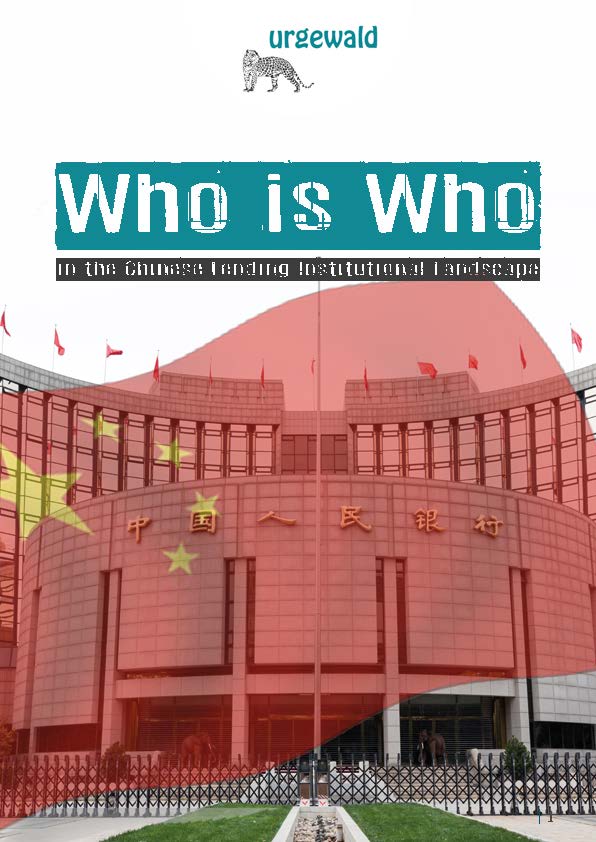
"Who is Who in Chinese Finance" Series
Series "Who is Who in Chinese Finance": This series aims to provide an orientation for civil society and affected communities to understand the organization of Chinese lending landscape.
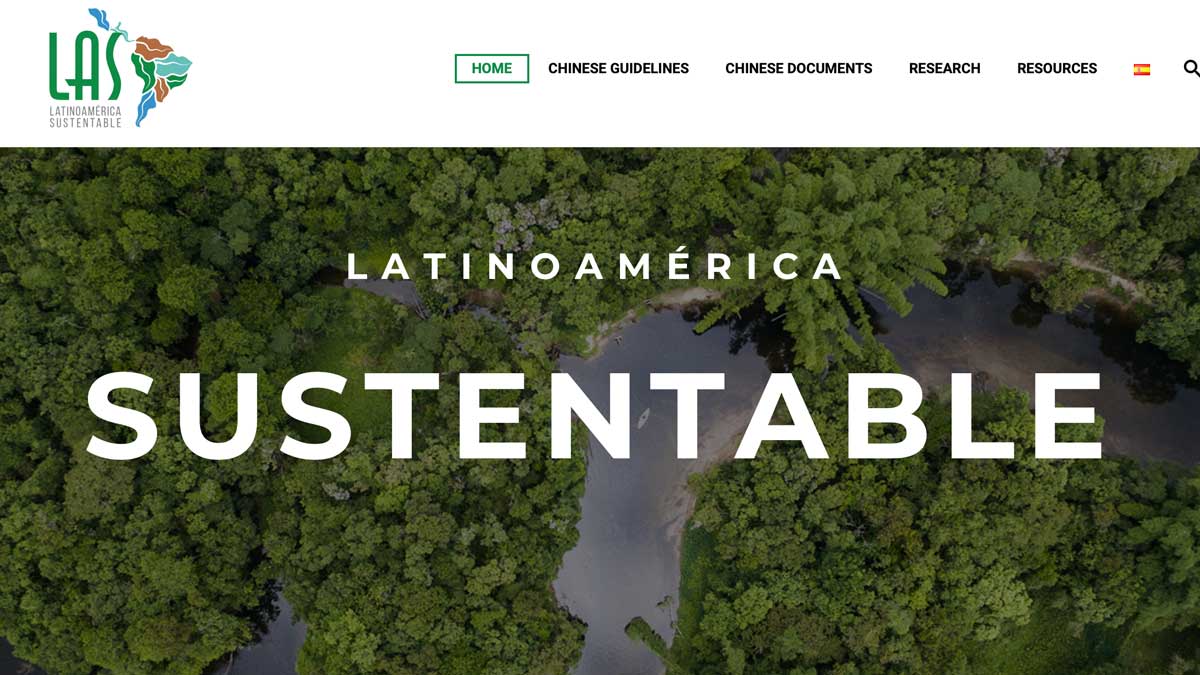
Chinese investment guidelines for companies and financiers
The LAS webpage provides rich, up-to-date material on Chinese investment guidelines for companies and financiers, policies and documents.
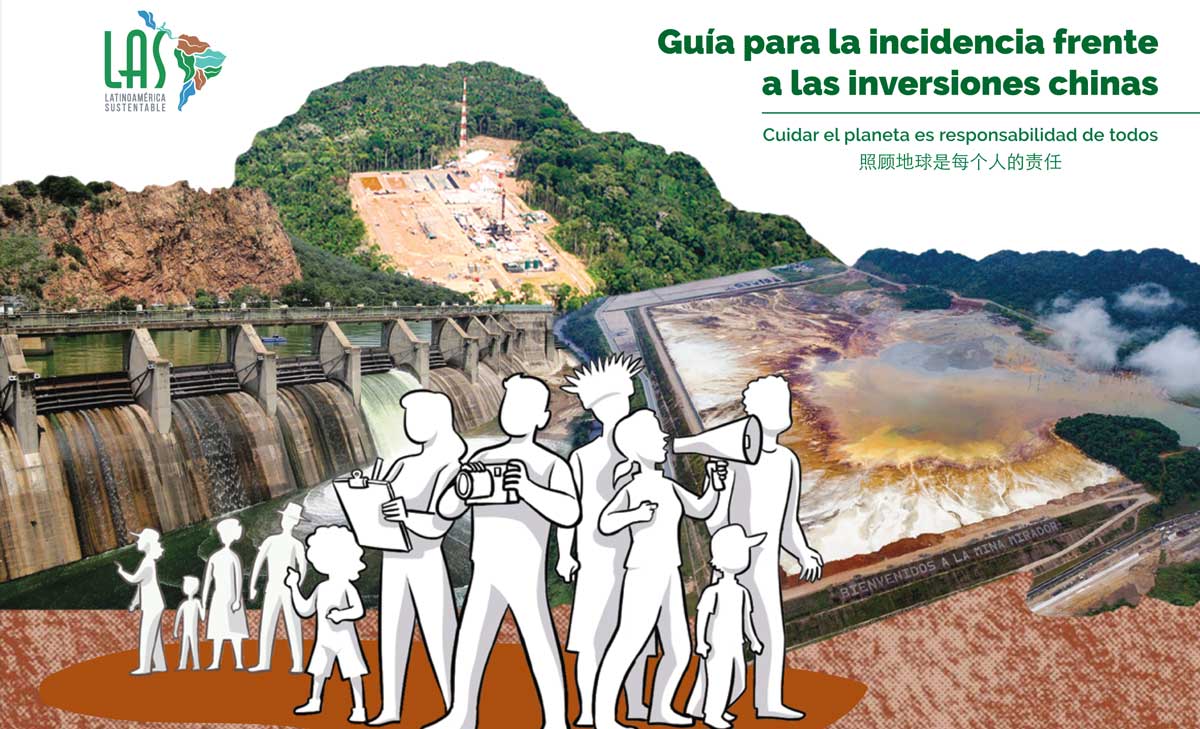
Advocacy Guide on Chinese investments (2024)
This guide is the first Spanish-language document to provide a basic "toolbox and practical knowledge" for identifying actors, moments, and arguments to carry out advocacy efforts directed at Chinese entities. Although Chinese investments have been present in Latin America for over two decades and have concentrated in activities with high environmental and social impacts, there is hardly any space for dialogue between Chinese entities and the communities their investments affect. This lack of communication has, contributed to the escalation of serious environmental and social conflicts in the region.
Inclusive Development International (IDI): Chinese outbound investments
This guide helps community advocates understand how Chinese investors operate, the standards that apply to their overseas operations, and strategies for holding Chinese companies accountable to their environmental and social responsibilities and commitments.
The People's Map of Global China
Country profiles examining bilateral relations with China and China’s economic and social presence, alongside detailed profiles of infrastructure and investment projects involving Chinese firms and financiers.
China's Overseas Development Finance Database
Boston University, Global Development Policy Center
This database tracks public finance lending by the China Development Bank (CDB) and the Export-Import Bank of China (CHEXIM) from 2008-2024 to governments, inter-governmental bodies, majority state-owned entities and minority state-owned entities with sovereign guarantees. Special focus is overlapping with indigenous land, biodiversity hotspots, or critical habitats.
CHRD Tool Page
These tools and resources were compiled by the Coalition for Human Rights in Development (CHRD) to support its members and partners, particularly communities, in understanding development banks and other financiers, defending their rights, and leading their own advocacy and communication efforts in response to intrusive or harmful development projects.

Business and Human Rights Centre
The Business and Human Rights Centre's website is the only global business and human rights knowledge hub. It delivers up-to-date and comprehensive news in 11 languages and a weekly update to a community of over 35,000 people in the Global South and North.
RIMA Publications
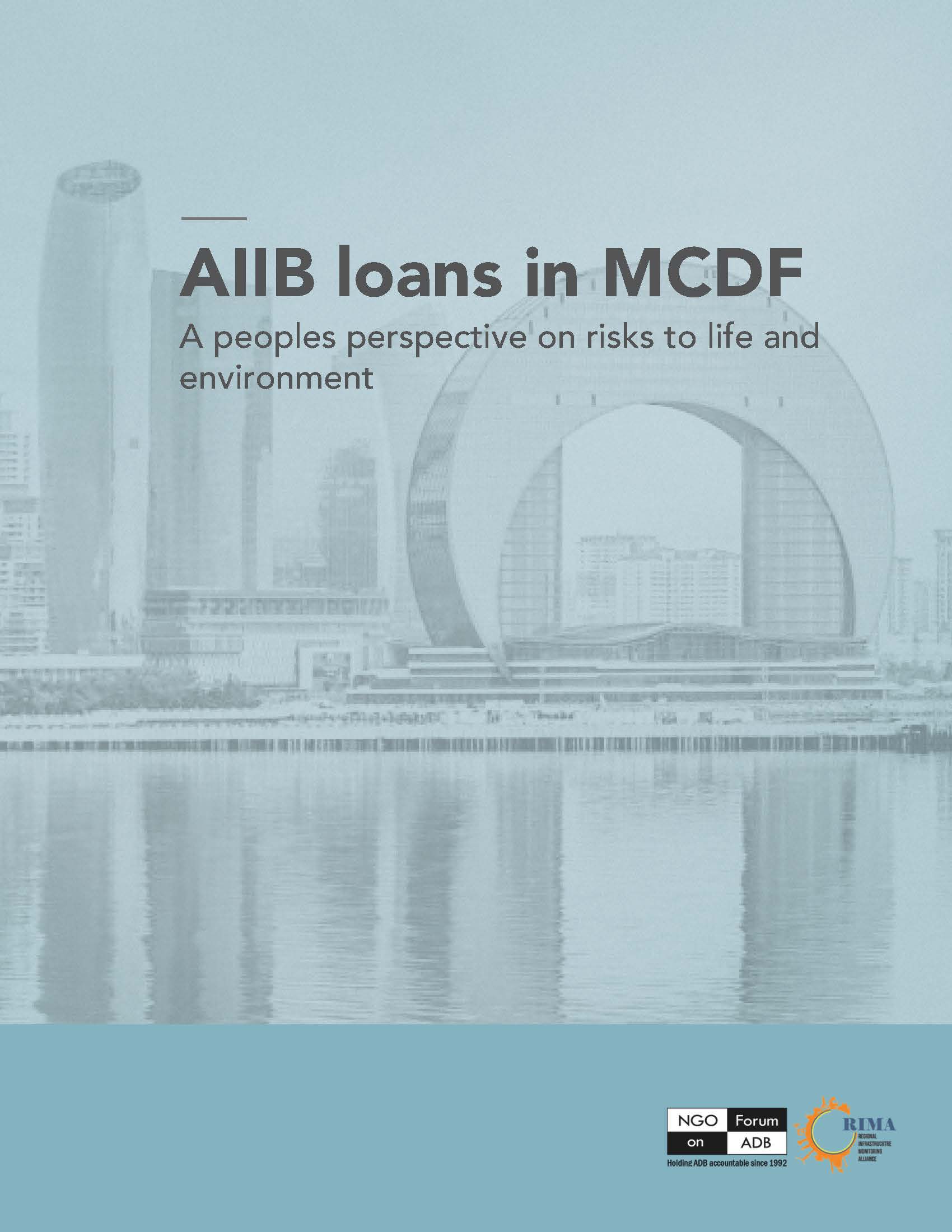
AIIB loans in MCDF (2025)
A people’s perspective on risks to life and environment
The dragon in the Delta (2026)
China-Bangla Power Mapping (forthcoming)
India China Power Mapping (2026)
(forthcoming)
RIMA Sharing Series
The Sharing webinars series focused on one country per session. Groups who worked on specific issues related to Chinese-financed investments reported on the particular circumstances and developments.
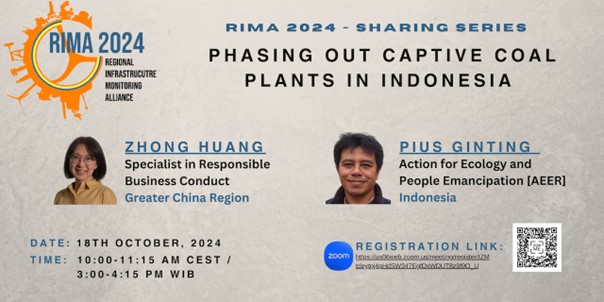
2024 Indonesia
Pius Ginting, Stevi Papuling, and Zhong Huang shared their experiences in interacting with Chinese companies involved in nickel mining and captive power plants in Indonesia. Stevi Rasinta Papuling played a pivotal role in advocating for the rights of local communities affected by mining. She started the session by reciting a poem about the communities' experience. Pius highlighted AEERs campaigns and most recent research on the nickel plants in Indonesia, as well as on China's role in the Nickels power plants. Zhong Huang shared learning and tips in how to interact with Chinese companies in Indonesia.
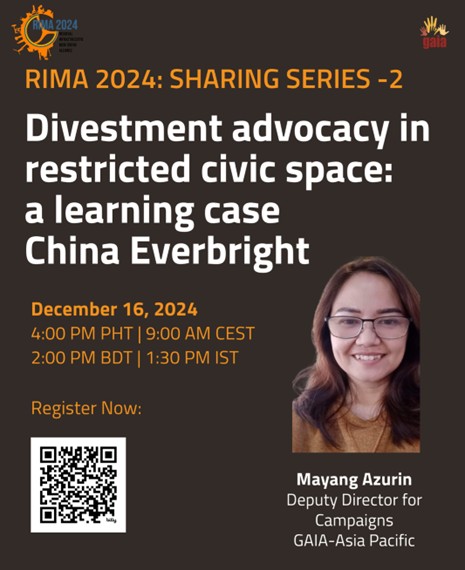
2024 People's Republic of China
Mayang Azurin from GAIA Asia Pacific shared learnings from the campaign on China Everbright which resulted in the divestment of AIIB. It’s the story of a years-long fight of communities and civil society who have raised concerns about China Everbright's Waste-to-Energy (WtE) incineration plants, citing corruption, pollution, lack of public transparency, and lack of meaningful consultation with affected communities.
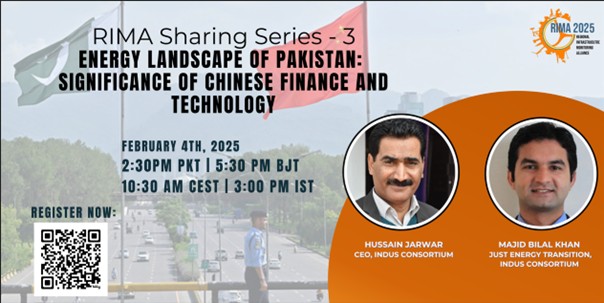
2025 Pakistan
Hussain Jarwar, Indus Consortium, Majid Bilal Khan, Indus Consortium
In this session, we had the privilege to hear from two high-level experts on Chinese investments in Pakistan, a highly indebted country. We learned about Pakistan’s role in China's Belt-and-Road Initiative, the detailed development of the solar rush and advocacy strategies on Chinese banks and BRI-related FIs.
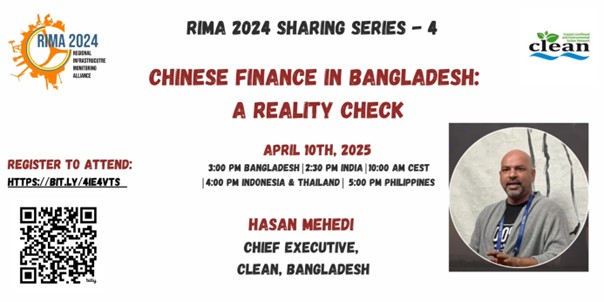
Chinese finance in Bangladesh: A reality check
Hasan Mehedi from CLEAN, Bangladesh, walked us through Chinese energy investments in Bangladesh and their heavy fossil fuel footprint. But also investments in renewables are dominated by Chinese financiers and companies.
RIMA Trainings
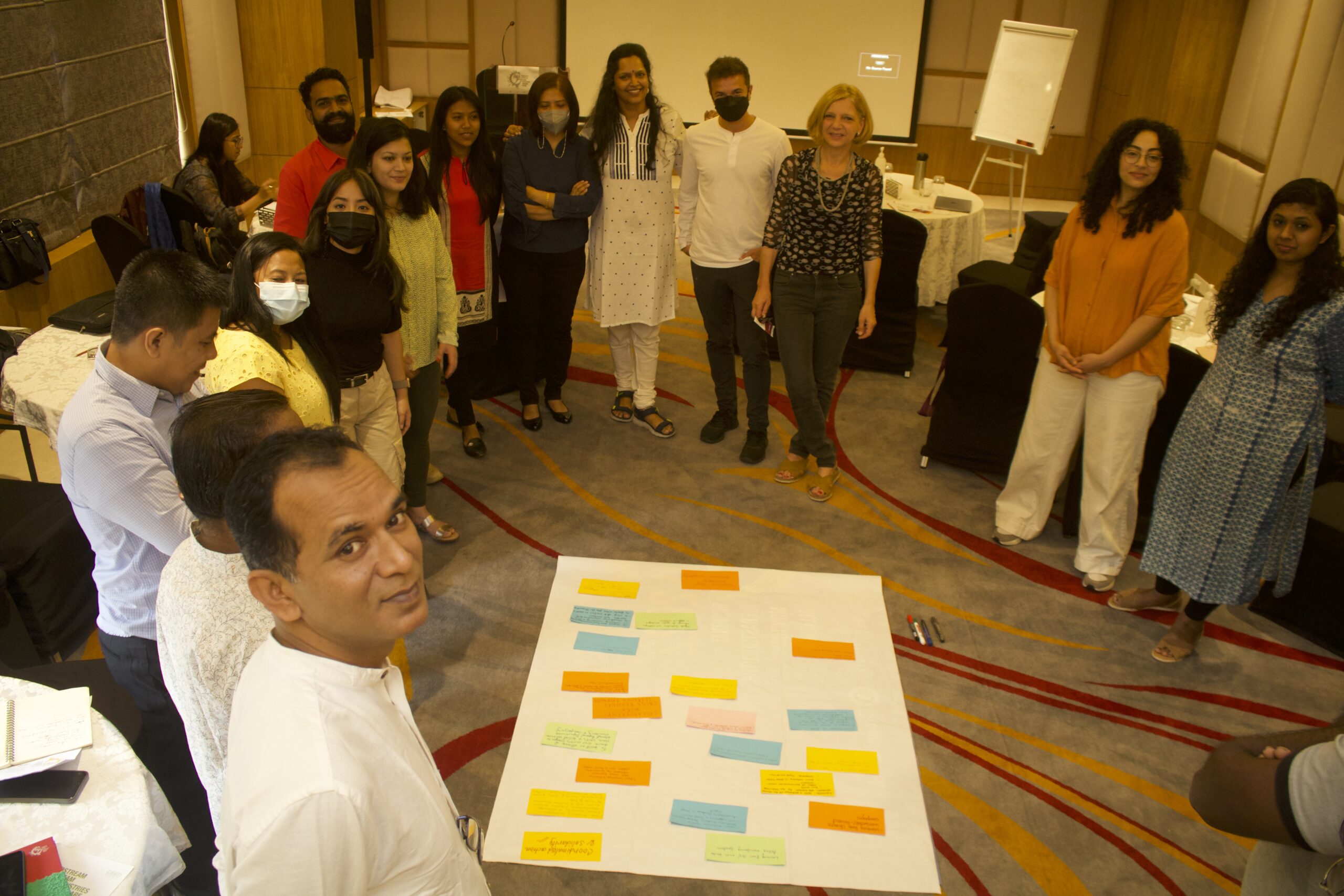
Members of RIMA regularly offer trainings on Chinese finance advocacy. In 2025, the Coalition for Human Rights in Development, together with LAS and Urgewald, organized several workshops with Asian and African groups who already were engaged in negotiations with Chinese stakeholders. The workshops focused on what communities need to know, how it is possible to do advocacy with Chinese companies, banks and government. We worked on very concrete cases and exchanged different approaches and strategies. In a rapidly shifting context where China has bailed out indebted BRI countries and with a shift to the GDI, how can RIMA best capitalize on this moment to help civil society in BRI countries advocate for more diverse policy and investment options that can shepherd in greener investments on climate adaptation?